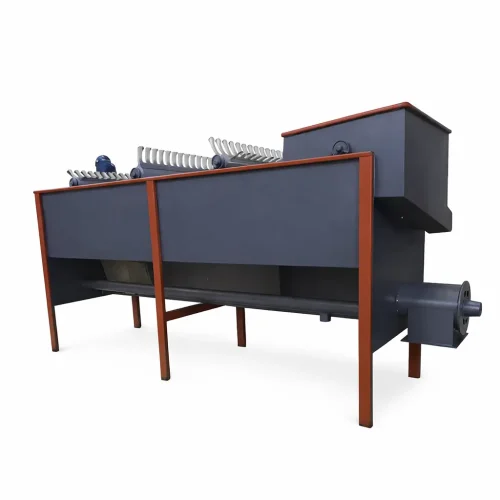

Industrial PET Granule Production Systems A PET granule production line is a core component of advanced plastic recycling operations across Europe, where quality, consistency, and sustainability standards are exceptionally strict. From packaging manufacturers to synthetic fiber producers, European industries rely...
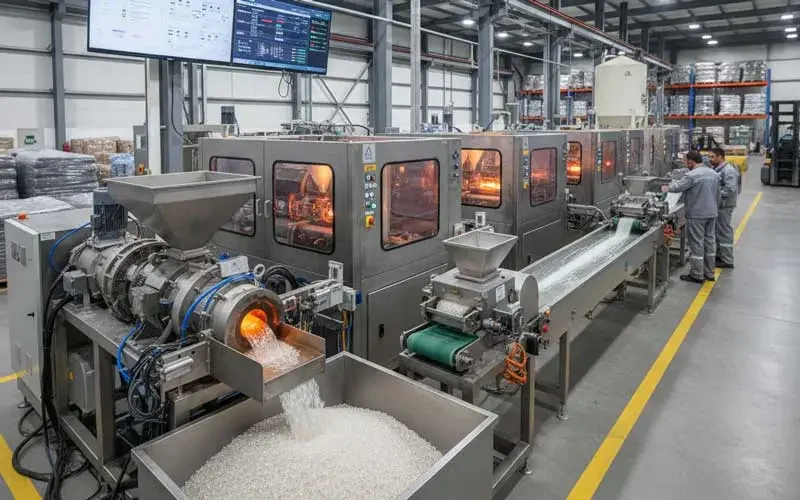
A PET granule production line is a core component of advanced plastic recycling operations across Europe, where quality, consistency, and sustainability standards are exceptionally strict. From packaging manufacturers to synthetic fiber producers, European industries rely on recycled PET granules that meet precise mechanical and chemical specifications. A well-engineered PET granule production line transforms processed PET flakes into uniform, high-purity granules suitable for demanding industrial applications. This process requires accurate temperature control, efficient filtration, and stable extrusion performance. Any deviation can result in material degradation or inconsistent output, which is unacceptable for regulated markets. Manufacturers investing in a PET granule production line are not simply purchasing machinery, but securing long-term production reliability.
A PET granule production line is essential for European recycling plants aiming to supply high-value recycled materials to packaging, automotive, and textile industries. Europe’s circular economy model depends heavily on reliable recycling infrastructure capable of producing consistent secondary raw materials. A modern PET granule production line allows manufacturers to reduce reliance on virgin plastics while maintaining strict quality standards. European regulations demand traceability, cleanliness, and material consistency, all of which depend on precise process control. A professionally designed PET granule production line ensures stable melt flow, uniform granule size, and minimal contamination.
The engineering design of a PET granule production line determines its efficiency, durability, and output quality. High-performance systems are built around robust extruders, precise temperature zones, and advanced filtration units that remove impurities before granulation. A PET granule production line must be engineered to handle variations in input material without compromising granule consistency. European facilities often process PET from multiple sources, making adaptability a key requirement. Modular design allows a PET granule production line to be customized or expanded as production needs evolve. Proper synchronization between feeding, melting, filtering, and cutting stages prevents material stress and degradation.
A PET granule production line does not operate in isolation. Its performance depends heavily on upstream recycling processes such as washing, drying, and material preparation. Proper integration ensures that the PET granule production line receives clean, dry, and uniform feedstock, which is essential for consistent granule quality. European recycling plants prioritize integrated systems to minimize material loss and energy consumption. A professionally engineered PET granule production line is designed with full system compatibility in mind. Negin Bartar Banaei has developed such systems by combining manufacturing and repair expertise, ensuring that each PET granule production line functions as part of a cohesive industrial process.
A PET granule production line plays a critical role in supplying recycled raw materials for synthetic fiber manufacturing. European textile producers increasingly depend on recycled PET to meet sustainability goals without sacrificing product quality. For fiber applications, a PET granule production line must deliver granules with controlled viscosity, minimal contamination, and stable molecular structure. Specialized PET granule production lines incorporate advanced filtration and degassing systems to ensure material purity. Precision engineering is required to maintain consistent processing conditions throughout long production runs.
Long-term reliability of a PET granule production line depends heavily on how it is built and how easily it can be serviced. Suppliers with repair experience design PET granule production lines that prioritize accessibility, standardized components, and predictable maintenance cycles. This approach significantly reduces downtime and operational risk. Negin Bartar Banaei began its industrial activities in 2009 with a focus on manufacturing and repairing recycling machinery, including PET granule production lines and synthetic fiber equipment. This dual focus ensures that engineering decisions are grounded in real operational challenges.
A PET granule production line intended for international markets must be adaptable to diverse operating conditions. Feedstock quality, energy availability, and production standards can vary significantly between regions. Negin Bartar Banaei has supplied machinery across Iran and neighboring countries such as Iraq, Turkmenistan, and Armenia, gaining valuable insight into varied industrial environments. This adaptability is highly relevant for European buyers seeking flexible, future-proof solutions. A well-designed PET granule production line allows operators to adjust parameters without compromising output quality.
Choosing a PET granule production line supplier requires careful evaluation beyond basic specifications. European buyers should assess engineering depth, customization capability, and long-term technical support. A PET granule production line is a strategic asset that directly influences production efficiency and product quality. Negin Bartar Banaei provides engineered solutions based on practical manufacturing experience, ensuring that each PET granule production line aligns with real industrial requirements rather than generic designs. This approach supports sustainable, high-performance production environments.
PET granule production line technology continues to evolve as European industries push for higher efficiency and sustainability. Automation, energy optimization, and digital monitoring systems are becoming standard features. Modern PET granule production lines integrate sensors and control systems that enable real-time monitoring and process optimization. These advancements help manufacturers reduce waste, improve consistency, and meet environmental targets. A future-ready PET granule production line provides European producers with a competitive advantage, ensuring compliance and long-term operational resilience.
Contact with Negin Bartar Banaei
Do you have any questions?
Contact us now so our experts can guide you.

درحال ورود...