
Advanced PET Recycling Machinery for Sustainable Plastic Processing PET recycling machinery plays a critical role in building a circular plastics economy, especially for European manufacturers focused on sustainability, efficiency, and regulatory compliance. In the first stage of any modern recycling...
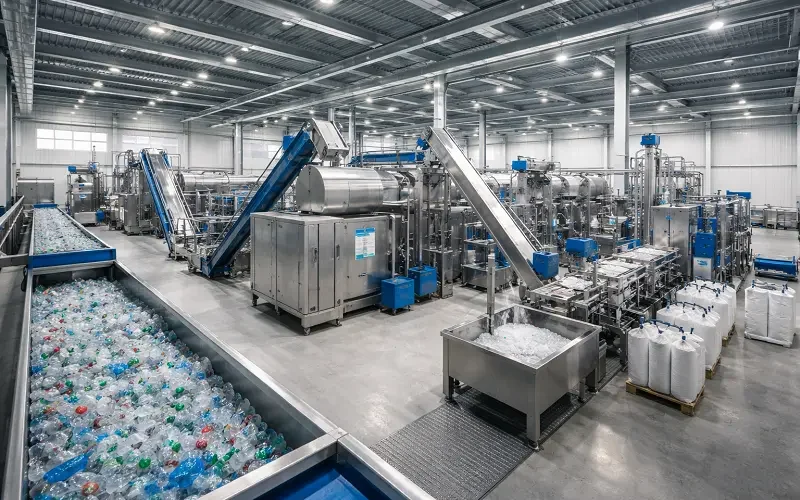
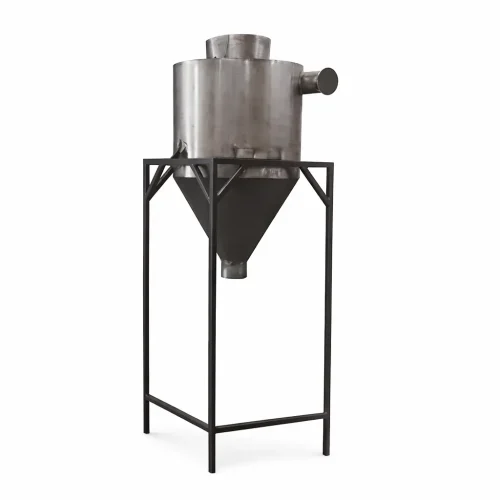
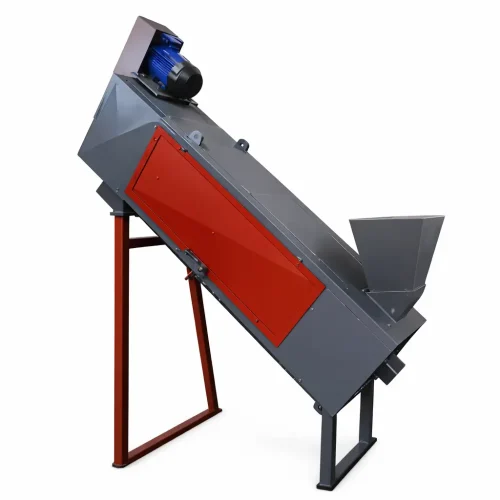
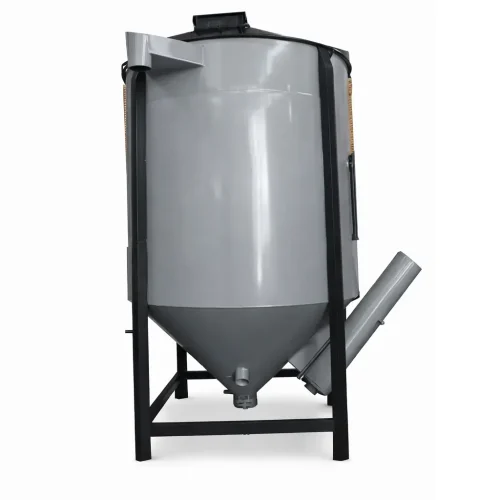
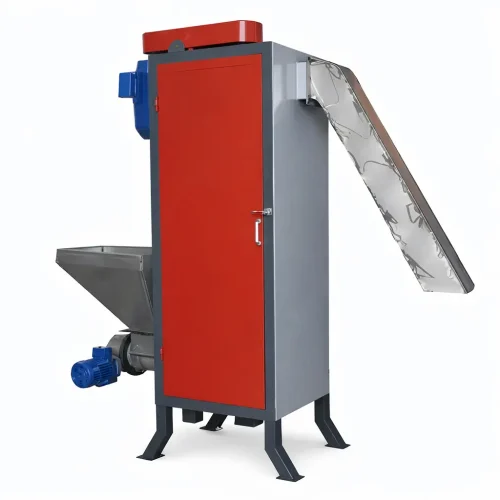
PET recycling machinery plays a critical role in building a circular plastics economy, especially for European manufacturers focused on sustainability, efficiency, and regulatory compliance. In the first stage of any modern recycling operation, high-quality PET processing lines determines output purity, energy consumption, and long-term operational costs. European buyers typically look for systems that combine mechanical precision, process stability, and adaptability to different feedstock qualities. This is exactly where experienced manufacturers with deep engineering knowledge stand out. PET recycling machinery is not only about shredding or washing plastic bottles. It is a fully integrated process that includes sorting, grinding, washing, drying, and preparing PET for further granulation or fiber production. Companies that understand these interconnected stages can deliver machinery that performs reliably under industrial-scale workloads. Negin Bartar Banaei has developed its expertise by designing and repairing complex recycling systems for diverse production environments, ensuring that each PET recycling machinery configuration aligns with real-world industrial demands rather than theoretical specifications.
PET recycling machinery has become essential across Europe due to strict environmental regulations, rising raw material costs, and growing demand for recycled PET in packaging and textile industries. European manufacturers require machinery that meets high technical standards while supporting sustainable production goals. PET processing lines enables companies to reduce dependency on virgin plastic, lower carbon emissions, and maintain consistent material quality. For industries producing food-grade packaging or synthetic fibers, process accuracy is non-negotiable. Advanced PET recycling machinery ensures controlled temperatures, effective contamination removal, and uniform flake or granule output. This level of control is critical for compliance with EU regulations and quality certifications. Manufacturers who invest in reliable PET recycling machinery also benefit from long-term cost efficiency, as optimized systems reduce waste, downtime, and maintenance frequency. Engineering-driven suppliers with hands-on manufacturing experience are better positioned to deliver machinery that supports continuous operation and scalable production lines tailored to European market expectations.
The design of PET recycling machinery directly impacts productivity, energy usage, and maintenance cycles. Industrial efficiency begins with robust mechanical structures, precision-engineered components, and modular system architecture. PET processing lines designed with modularity allows manufacturers to upgrade or expand production lines without replacing entire systems. This is particularly valuable for European facilities adapting to changing regulations or market demands. Another critical design principle is process integration. From initial shredding to final drying, PET recycling machinery must operate as a synchronized system rather than isolated units. Poor integration leads to bottlenecks, material loss, and inconsistent output quality. Experienced manufacturers focus on material flow optimization, automation compatibility, and operator safety. PET processing lines built with these principles ensures stable performance even under high-throughput conditions. Engineering teams with real manufacturing and repair experience bring practical insights that improve durability and long-term reliability, which are essential factors for industrial buyers.
PET recycling machinery is often closely integrated with PET granule production lines, especially in facilities targeting high-value recycled outputs. Granulation requires precise control over material moisture, temperature, and contamination levels. PET processing lines must therefore deliver clean, uniform flakes suitable for extrusion and pelletizing. European customers frequently demand machinery capable of producing granules that meet strict quality standards for reuse in packaging, fibers, or technical applications. PET processing lines designed for granule production emphasizes advanced washing systems, efficient drying units, and consistent feed rates. These elements reduce defects and improve final granule quality. Companies like Negin Bartar Banaei have developed PET processing lines and granule production systems by combining manufacturing expertise with hands-on repair knowledge, resulting in equipment that performs reliably over extended production cycles. This dual perspective helps address real operational challenges faced by industrial users.
PET recycling machinery is increasingly used in synthetic fiber production, especially for textiles and industrial fibers. European textile manufacturers rely on recycled PET as a sustainable alternative to virgin polyester. PET processing lines designed for fiber applications must produce highly pure, consistent material with controlled viscosity. Any variation in processing can affect fiber strength, appearance, and durability. Specialized PET processing lines includes advanced filtration, precise thermal control, and stable extrusion preparation. These features ensure recycled PET meets the demanding requirements of fiber spinning processes. Manufacturers with experience in both machinery construction and process engineering can tailor PET recycling machinery to fiber-specific needs. This capability allows European producers to maintain product quality while meeting sustainability targets. Integrated solutions that connect recycling, granulation, and fiber machinery offer long-term operational advantages and reduced production complexity.
Manufacturing PET recycling machinery is only part of the equation. Long-term performance depends heavily on repairability, component availability, and technical support. European buyers increasingly value suppliers who understand both machine construction and maintenance realities. PET recycling machinery built with serviceability in mind reduces downtime and extends equipment lifespan. Companies with repair experience design systems that allow easy access to wear parts, standardized components, and straightforward diagnostics. This approach minimizes operational disruptions and maintenance costs. Negin Bartar Banaei began its industrial activities in 2009 with a focus on both manufacturing and repairing recycling machinery, including PET, nylon, and synthetic fiber systems. This background enables the company to deliver PET recycling machinery that balances performance with practicality. Engineering decisions are informed by real-world repair scenarios, resulting in more resilient and user-friendly industrial equipment.
PET recycling machinery designed for international markets must adapt to varying material qualities, operational standards, and production scales. Suppliers with export experience understand these differences and design flexible systems accordingly. industrial recycling machinery used across different regions must handle diverse input materials without compromising output quality. Companies that have successfully served multiple markets develop a broader engineering perspective. Negin Bartar Banaei has supplied machinery to Iran and neighboring countries such as Iraq, Turkmenistan, and Armenia, gaining valuable experience in diverse industrial environments. This adaptability translates well to European markets, where customization and compliance are critical. industrial recycling machinery built with adjustable parameters, scalable capacity, and robust construction is better suited for international deployment. European customers benefit from machinery that can evolve with regulatory changes and production demands.
Selecting the right industrial recycling machinery supplier is a strategic decision for European manufacturers. Beyond technical specifications, buyers should evaluate engineering depth, customization capability, and long-term support. PET recycling machinery represents a significant investment, and its performance directly affects operational efficiency and product quality. Suppliers with in-house engineering teams, manufacturing facilities, and repair expertise offer greater reliability. Transparent communication, detailed technical documentation, and customization options are indicators of a serious industrial partner. Negin Bartar Banaei combines engineering knowledge with practical manufacturing experience, offering industrial recycling machinery designed for demanding industrial applications. This approach ensures machinery aligns with production goals rather than generic specifications, which is essential for competitive European operations.
PET recycling machinery continues to evolve as sustainability requirements and production technologies advance. Automation, energy efficiency, and digital monitoring are becoming standard expectations in European facilities. Modern industrial recycling machinery integrates smart sensors, process monitoring systems, and energy optimization features to improve efficiency and traceability. These technologies help manufacturers meet environmental targets while maintaining profitability. Another emerging trend is closed-loop recycling systems, where PET recycling machinery supports continuous reuse within the same production chain. Engineering-focused manufacturers are investing in research and development to enhance material recovery rates and reduce waste. PET recycling machinery that aligns with these trends provides long-term value and future-proof production capabilities. European buyers increasingly prioritize suppliers who demonstrate technical innovation alongside proven industrial reliability.
Do you have any questions?
Contact us now so our experts can guide you.

درحال ورود...